Proposal generation is a critical phase within the broader sales process, where a potential sale moves from the conceptual stage towards a formal offer. This step involves creating a document that outlines the products or services a business proposes to supply, detailing specifications, pricing, terms, and conditions tailored to the potential client's needs.
What is a Sales Proposal?
A sales proposal combines consistent textual content with flexible components customized to meet the unique needs of every customer. It is a showcase of products or services, offering a customized proposal that meets the goals and limitations of the potential client.
The static component of a sales proposal typically encompasses the language and sections that remain unchanged across different proposals. This includes:
Introduction: A section that introduces the company, its values, and how its offerings align with the potential client's needs.
Company Overview: Background information about the company, including its history, achievements, and expertise.
Services or Products Offered: A detailed description of the services or products being proposed, highlighting features and benefits without specific customization for the client.
Terms and Conditions: The general terms of service, payment terms, legal disclaimers, and other contractual elements that apply to all clients uniformly.
Conclusion: A closing statement that reinforces the value proposition and invites the client to take the next step (e.g., a meeting, a call, or signing the proposal).
The dynamic component of a sales proposal is highly customized and varies significantly from one proposal to another, primarily focusing on:
Pricing Models: Depending on the customer's specific requirements, the pricing model can vary. It might be based on volume, duration of service, level of customization, or other factors.
Customized Solutions: Tailored descriptions of how the product or service will be customized or adapted to meet the client's unique needs and challenges.
Calculations: Complex calculations that take into account various customer specifications, such as quantities, service levels, custom features, and discounts. These calculations result in a pricing structure unique to each proposal.
Options and Variations: Different options or variations of the product or service that the client can choose from, each with its own pricing and description tailored to the client's specifications.
Timelines and Deliverables: Customized timelines and deliverables based on the client's project scope, urgency, and specific milestones.
The effectiveness of a sales proposal lies in the balance and integration of both static and dynamic components. The static language provides a solid foundation, establishing credibility and setting the stage for the tailored offering. In contrast, the dynamic pricing information demonstrates flexibility and a willingness to adapt to the client's specific needs, showcasing a customer-centric approach.
Why Automate the Generation of Sales Proposals?
Automating the generation of sales proposals is a strategic enhancement to the sales process that offers multiple benefits, playing a crucial role in improving efficiency, consistency, and effectiveness in sales activities.
Increased Efficiency: Automation significantly reduces the time required to create each sales proposal. Sales representatives can quickly generate customized proposals using templates that automatically pull in relevant data, allowing them to respond to potential clients faster and spend more time on selling activities and less on administrative tasks.
Consistency and Accuracy: Automated systems help maintain consistency across all sales proposals, ensuring that each document adheres to company standards and branding guidelines. This uniformity presents a professional image to prospects. Additionally, by minimizing manual data entry, the likelihood of errors is reduced, enhancing the accuracy of proposals.
Shortened Sales Cycles: By accelerating the proposal generation process, automation can shorten the overall sales cycle. Faster proposal turnaround times can lead to quicker decision-making by prospects, allowing sales teams to close deals more rapidly and efficiently.
Cost Reduction: Automating the proposal generation process can lead to significant cost savings. By reducing the time and resources required to create proposals, companies can allocate their resources more effectively, improving the overall return on investment in the sales process.
Competitive Advantage: In a competitive market, the ability to quickly deliver personalized, professional, and accurate proposals can set a company apart from its competitors. Automation ensures that businesses can meet or exceed customer expectations, enhancing their reputation and increasing their chances of securing new clients.
Automate the Generation of Complex Sales Proposals with SpreadsheetWeb
Creating complex sales proposals doesn't have to be a daunting task. With SpreadsheetWeb, you can transform your Excel spreadsheets into automated, web-based proposal generators.
Starting with Excel is the first step in crafting your application. Excel's capabilities are ideal for developing the pricing calculations and data models essential for your proposals. It's crucial to employ named ranges within your Excel document, as SpreadsheetWeb uses these to locate and interact with the necessary data.
After preparing your Excel document, the following phase involves transferring it to the SpreadsheetWeb Hub. Here, your Excel document undergoes a transformation into a web application. The process of uploading and conversion is designed to smoothly transition your Excel model to a format suitable for the web. Don't forget to click here to learn how to create an application like Term Life Insurance Quoting Tool.
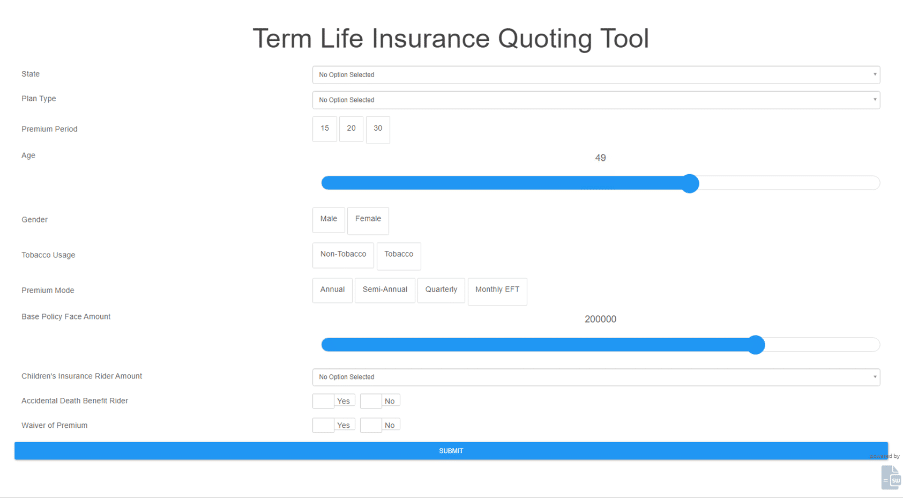
In the next phase of our project, we will refine the approach to creating proposals by developing a Word document template, which will act as the foundation for our future submissions. This template will incorporate strategically placed placeholders, or "stubs," that are designed to receive specific data points. This method ensures that each proposal is not only personalized but also maintains a high level of precision and relevance to the recipient.
To optimize this process, we will leverage Microsoft Word's robust features alongside data merge techniques. Microsoft Word is renowned for its intuitive interface and extensive customization capabilities, making it the perfect tool for designing templates that meet our specific requirements. Coupled with data merge, which automates the insertion of personalized data into the template, we significantly streamline the proposal creation process. This synergy not only saves valuable time and minimizes errors but also upholds consistency and professionalism across all documents. Ultimately, this strategy provides a practical and efficient means of producing customized proposals in large volumes with minimal effort, ensuring each document is perfectly tailored to its intended audience.
Within this template, placeholders, or "stubs," are strategically placed. These stubs are designated spots where specific data points will be integrated, ensuring each proposal is personalized and precise.
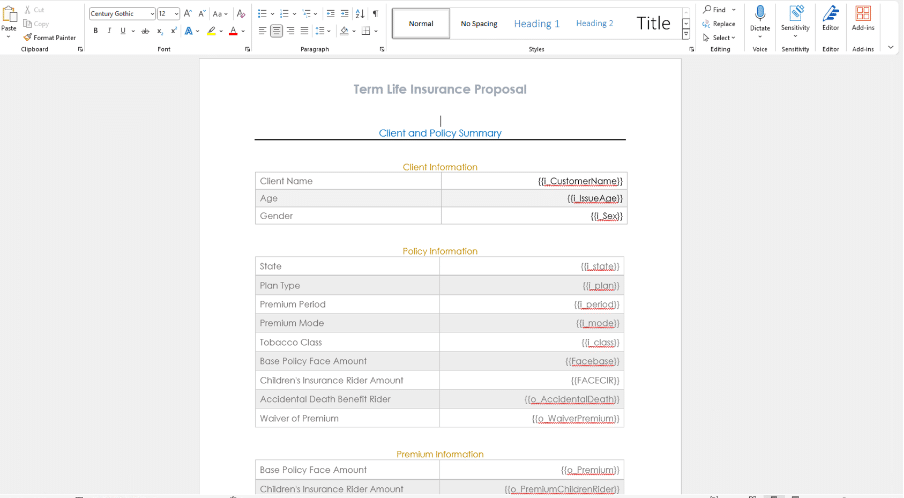
These are essentially markers for where information, like pricing details and customized solutions, will be automatically filled in based on the data from your web application. These stubs correspond to the named ranges or the outputs from your SpreadsheetWeb application, ensuring each proposal is tailored to the client’s specifications.
Adopting this approach simplifies the development of detailed sales proposals. It begins with creating your application in an Excel spreadsheet, transforming it into a web application via SpreadsheetWeb Hub, and then utilizing a Word document template that incorporates specific data points through placeholders. This streamlined process aids in automating a significant portion of the proposal workflow. The advantage of this method is twofold: it not only saves time but also enhances the accuracy and consistency of your proposals, allowing you to direct more attention to your clients.