
Expense reporting is vital in business finance, serving as a key element for managing finances effectively. It provides a systematic way to observe and record expenses, critical for maintaining transparency, staying within budget, and ensuring financial discipline within the corporate environment. Expense reporting is more than just keeping track of receipts; it's an essential mechanism for identifying spending patterns, allocating resources wisely, and maintaining compliance with the financial regulations that shape the business world.
At its core, expense reporting involves the detailed recording of all business-related expenses by employees. This includes everything from travel and client meetings to necessary purchases; each meticulously logged to form a detailed financial record for the company. This information is crucial for businesses to make informed decisions, maintain financial integrity, and gain insight into how expenditures align with the company's goals.
Traditionally, businesses relied on Excel spreadsheets for this task. Excel was familiar, adaptable, and offered the necessary customization options. However, as business operations evolved, the limitations of using Excel for expense reporting became apparent. The primary concern? Manual data entry. Imagine the tedious process of entering each expense by hand. Not only is this time-consuming, but it also opens the door to errors. In the fast-paced business environment, such manual methods are inefficient, making it challenging to manage transactions effectively and hindering real-time financial oversight. This once dependable system began to seem inadequate for businesses aiming to maximize their potential.
The drawbacks of sticking with traditional methods are increasingly evident in the current fast-moving business climate. Manual data entry means more time spent tracking expenses and rectifying mistakes, which could be invested in business growth. The lack of instant access to expense data complicates making swift, informed decisions. This scenario is akin to competing in a race with outdated equipment while others have advanced to more efficient technologies. The inefficiencies stand out, prompting businesses to seek more modern and automated solutions to maintain competitiveness and efficiency. This transition marks a move towards automated systems that can keep pace with the demands of contemporary business operations.
Introducing SpreadsheetWeb
SpreadsheetWeb is a No-Code platform that transforms how businesses and individuals manage data and operations. Imagine a platform where creating web applications doesn't require extensive coding knowledge—SpreadsheetWeb brings this vision to life. It is a transformative tool for businesses, enabling the effortless construction of sophisticated web applications.
This platform is designed to be intuitive and user-friendly, making digital solutions accessible to a broad audience across various industries. With a collection of ready-to-use SpreadsheetWeb Hub Templates, it simplifies complex processes and adapts to diverse business needs. These templates offer a range of functionalities tailored to support and enhance workflows, whether you're a small business owner or an experienced professional.
SpreadsheetWeb's interface is crafted for ease of use, allowing for the seamless creation of web applications. This opens up opportunities for businesses to refine their operations. SpreadsheetWeb paves the way toward a future where technology serves not as a hurdle but as a catalyst for productivity and innovation, empowering users to confidently manage their data. It represents a significant step forward in making web applications more attainable and beneficial for all involved.
Building Expense Reporting Applications with SpreadsheetWeb
In the business world, managing expenses can feel like finding your way through a bustling market. SpreadsheetWeb emerges as a valuable navigator, simplifying this complex task. Picture a platform enabling businesses to craft expense reporting applications without deep technical expertise.
SpreadsheetWeb Hub takes a significant step forward, providing businesses with specially designed templates for expense reporting. These templates serve as pre-built solutions that companies can seamlessly integrate into their workflows regardless of size. They eliminate the need for intricate programming, making developing comprehensive expense reporting applications straightforward and efficient.
Expense Reporting Application Template
Exploring the Expense Reporting Application Template reveals an innovative approach for small businesses aiming for an efficient way to track expenses without complications. This template presents a flexible and approachable platform for automating the recording and oversight of costs. Within the day-to-day operation of a small business, employees can quickly enter their costs using a simple web interface. Upon submission, managers receive immediate email notifications, enabling them to quickly review, approve, or decline the expense reports. This streamlined procedure keeps all parties informed and fosters an open environment for managing expenditures.
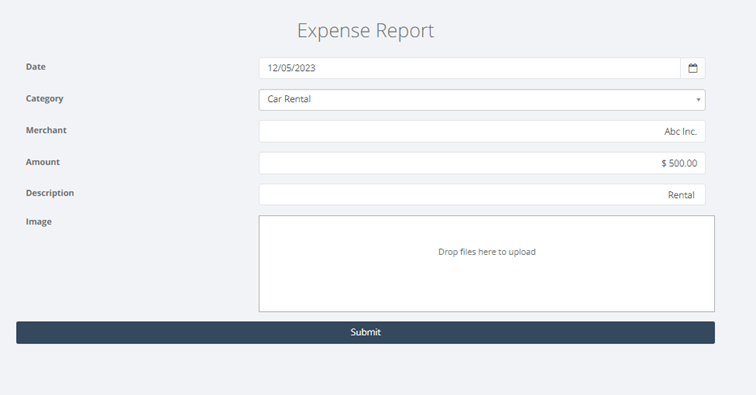
In the dynamic environment of small business operations where every moment counts, the Expense Reporting Application Template stands out as a dependable and user-focused tool. It addresses expense management challenges, enabling businesses to oversee their financial activities effortlessly.
Thanks to the Expense Reporting Application Template from SpreadsheetWeb Hub, small businesses can adopt a more streamlined process for handling expenses. This shift allows them to allocate more time and resources toward other critical tasks, enhancing overall productivity and efficiency in their daily operations.
Expense Report Dashboard Template
The Expense Report Dashboard is a transformative tool that elevates expense management for organizations. It works harmoniously with the Expense Report Application, delivering immediate insights into the tracking, analysis, and oversight of expenses, thus streamlining the financial decision process.
Designed with user accessibility in mind, the Expense Report Dashboard acts as a navigational aid in the financial domain. Its interactive features, such as pie charts, offer a concise overview of expenses divided into categories such as Airfare, Equipment, Internet, and Taxi Service. This functionality serves as a financial guide, enabling organizations to pinpoint key expense areas for improved budgeting strategies.
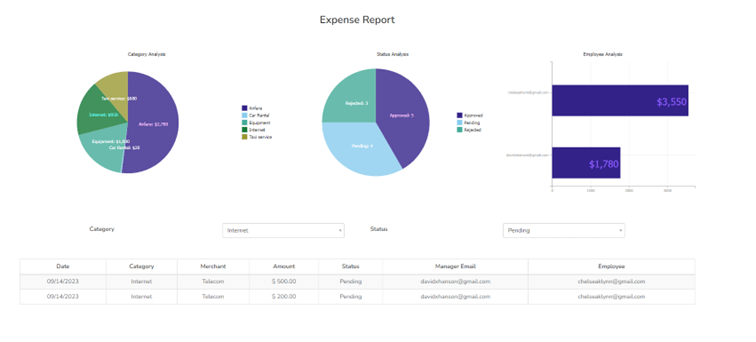
To fully utilize the capabilities of the Expense Report Dashboard, it's essential to implement the "Expense Report Application" template. Together, they form a cohesive system that revolutionizes expense management, making it a straightforward and productive activity. The Expense Report Dashboard extends beyond merely a tool; it acts as a financial ally, aiding organizations in smoothly managing the complexities of expenses.
Transitioning from the conventional use of Excel to the advanced SpreadsheetWeb platform signifies a significant evolution in business finance towards greater efficiency and automation. The challenges of manual entries and limited data visibility are addressed with the SpreadsheetWeb Hub Templates, offering a modern solution to expense reporting.
SpreadsheetWeb's specialized templates, including the Expense Reporting Application and Expense Report Dashboard, enable businesses, particularly smaller ones, to effortlessly tread the complex terrain of expense management. This adoption heralds SpreadsheetWeb as a key player in ushering in a new era where technological advancements elevate financial management, allowing companies to make strategic decisions and achieve heightened operational efficiency.